





Whether you’re looking for somewhere to store your wine collection, keep cans chilled for a party, or simply free up space in your kitchen fridge, you’ve probably come across the terms beverage cooler, drinks fridge, and mini fridge. People often use them as if they mean the same thing. They don’t, and choosing the wrong one could leave you with food stored at an unsafe temperature.
This guide cuts through the confusion and explains the real differences between each type of mini fridge and beverage cooler, so you can make the right choice for your home.
Is a beverage cooler the same as a mini fridge?
So, the big question: are beverage coolers and mini fridges the same?
No – and this is probably the most common source of confusion. A beverage cooler and a mini fridge are two distinct products, designed for different purposes. Here’s the quick version:
- A beverage cooler (also known as a drinks cooler or a drinks fridge) is designed exclusively for storing drinks. It operates at a higher temperature range than a standard fridge and is not suitable for storing food.
- A mini fridge is a compact version of a regular refrigerator. It is used like a regular fridge – just smaller. A mini fridge runs at food-safe temperatures, which means it can be used to store both food and drinks, like your usual kitchen fridge.
A beverage cooler and a mini fridge may look similar at first glance – they’re both compact, freestanding appliances – but their internal temperatures, designs, and intended uses are different.
Wine fridge, mini fridge, and beverage cooler: What’s the difference?
Here’s a more detailed breakdown of the differences between fridges, mini fridges, wine fridges, and beverage coolers.
Standard fridge (refrigerator)
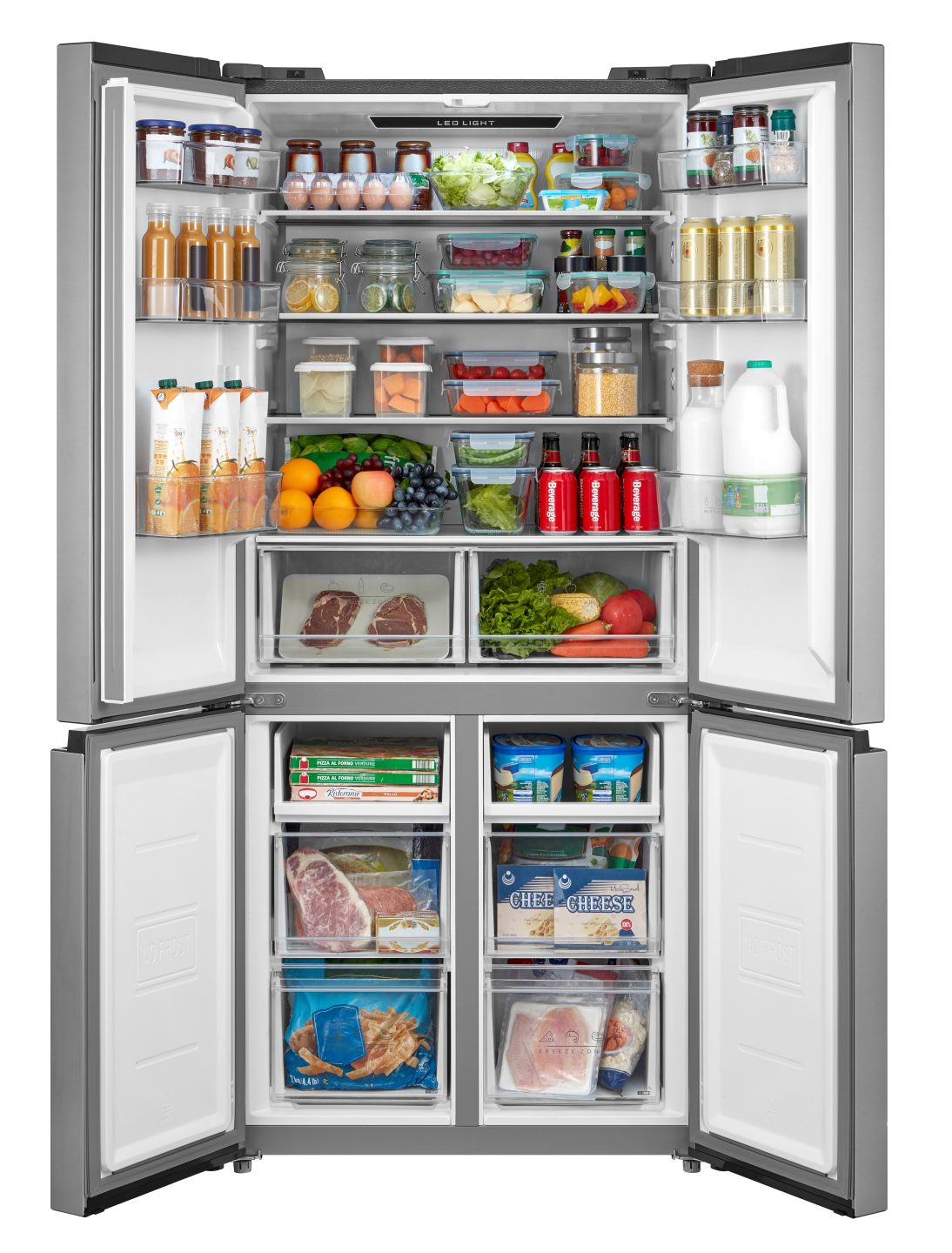
A standard fridge – whether freestanding or built-in – is a full-sized kitchen appliance designed to store both food and drink at food-safe temperatures. In the UK, the Food Standards Agency recommends keeping your fridge at or below 5°C. Standard fridges typically range in capacity from around 200 to 400+ litres and are usually integrated into kitchen cabinetry or stood against a wall.
Mini fridge
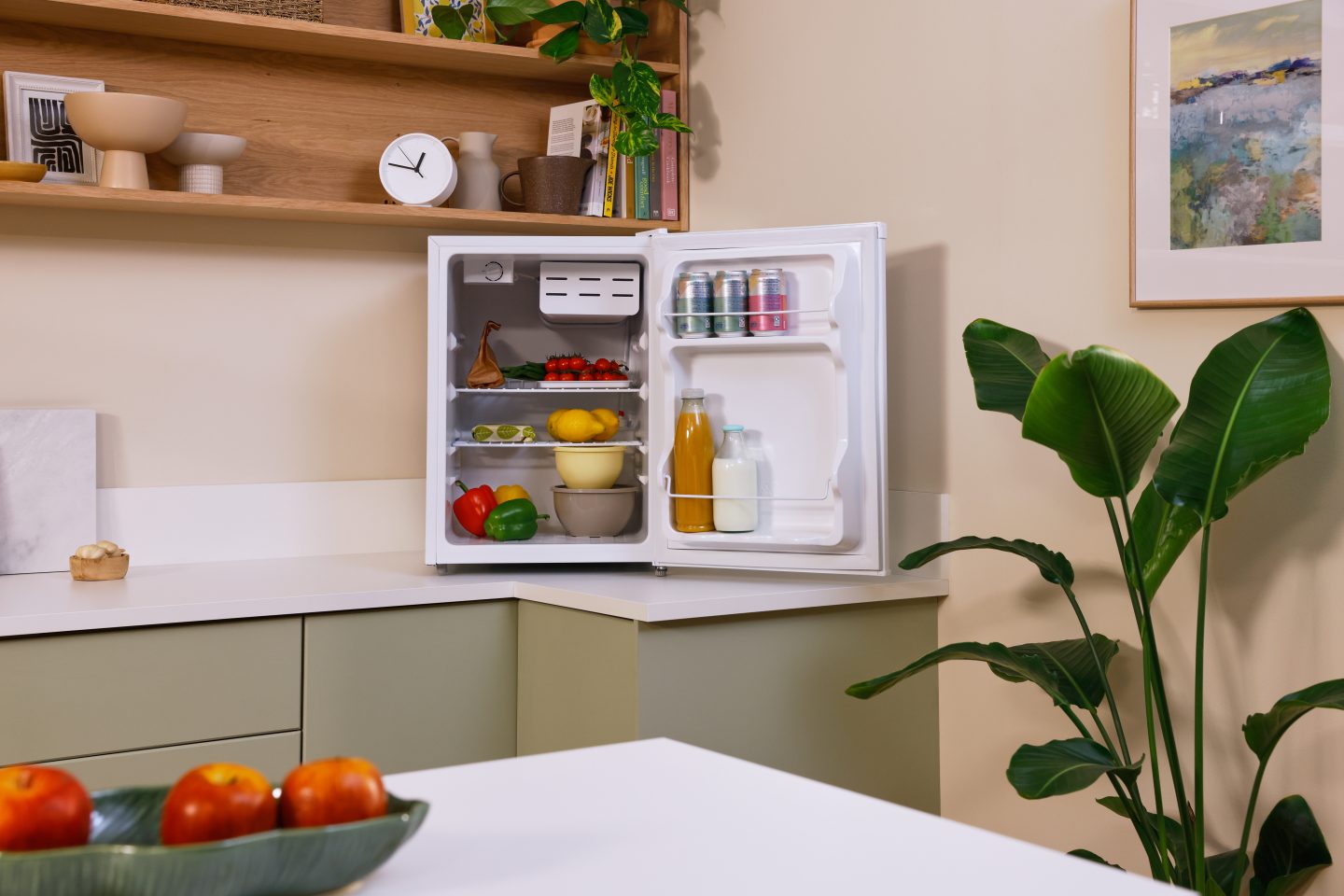
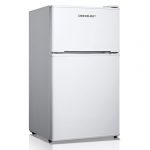
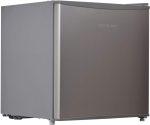
A mini fridge is essentially a shrunken version of your kitchen fridge. It maintains the same food-safe temperature range (typically 0–4°C) and is designed to store both food and drinks. Mini fridges are popular in bedrooms, home offices, student accommodation, and anywhere you want a small amount of chilled storage without a full-sized appliance.
Most mini fridges top out at around 50–65 litres of capacity and tend to have a similar interior layout to a standard fridge, with shelves and sometimes a small ice box compartment. They look like scaled-down kitchen fridges.
Beverage cooler (drinks cooler/drinks fridge)
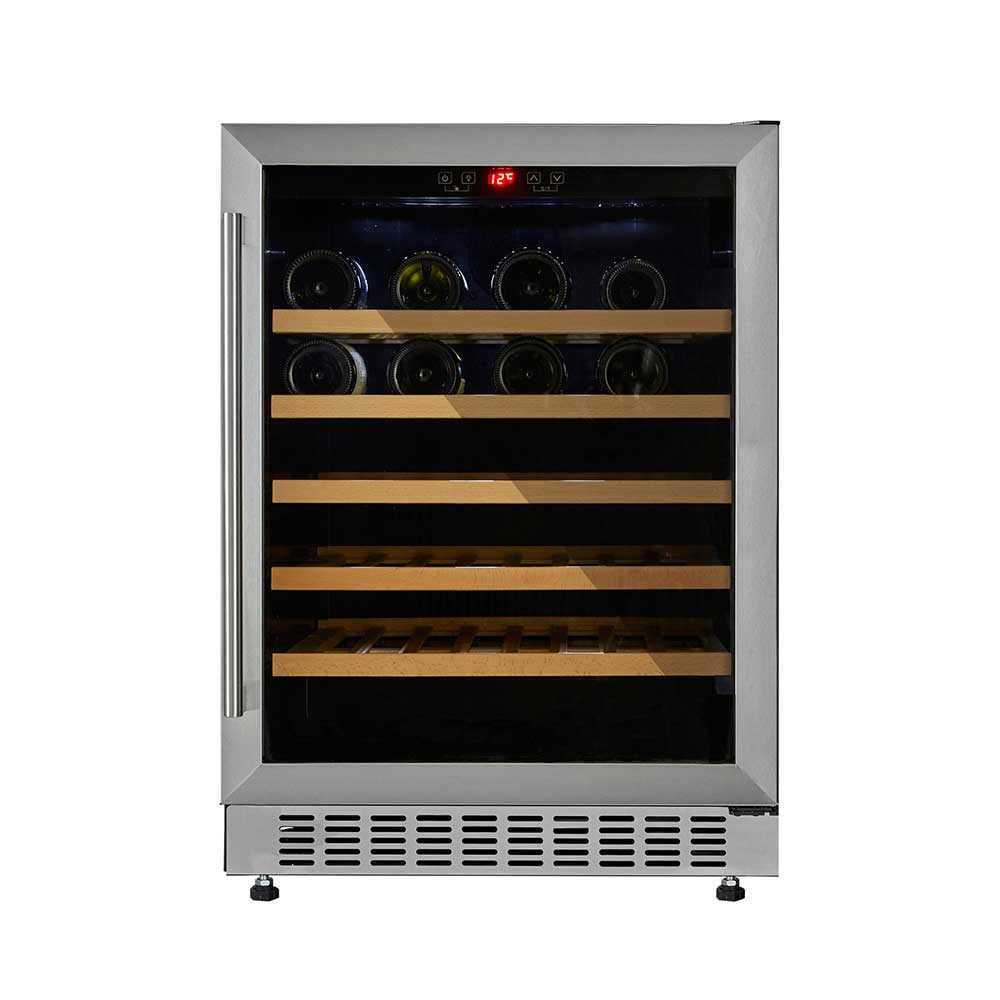
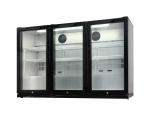
A beverage cooler is built purely for drinks. Unlike a mini fridge, it’s not designed to store food – and the reason comes down to temperature. Beverage coolers typically operate at 8–18°C, which is the ideal range for drinks like wine, beer, and soft drinks, but too warm for food safety.
Beverage coolers usually feature a glass door to showcase your drinks, interior LED lighting, and shelves designed specifically to hold bottles and cans. They’re often significantly larger than mini fridges and tend to have a far more stylish, design-led aesthetic. If you want a drinks station in your kitchen, dining room, or home bar, a beverage cooler is the appliance to go for.
Wine fridge (wine cooler)
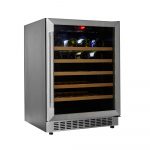
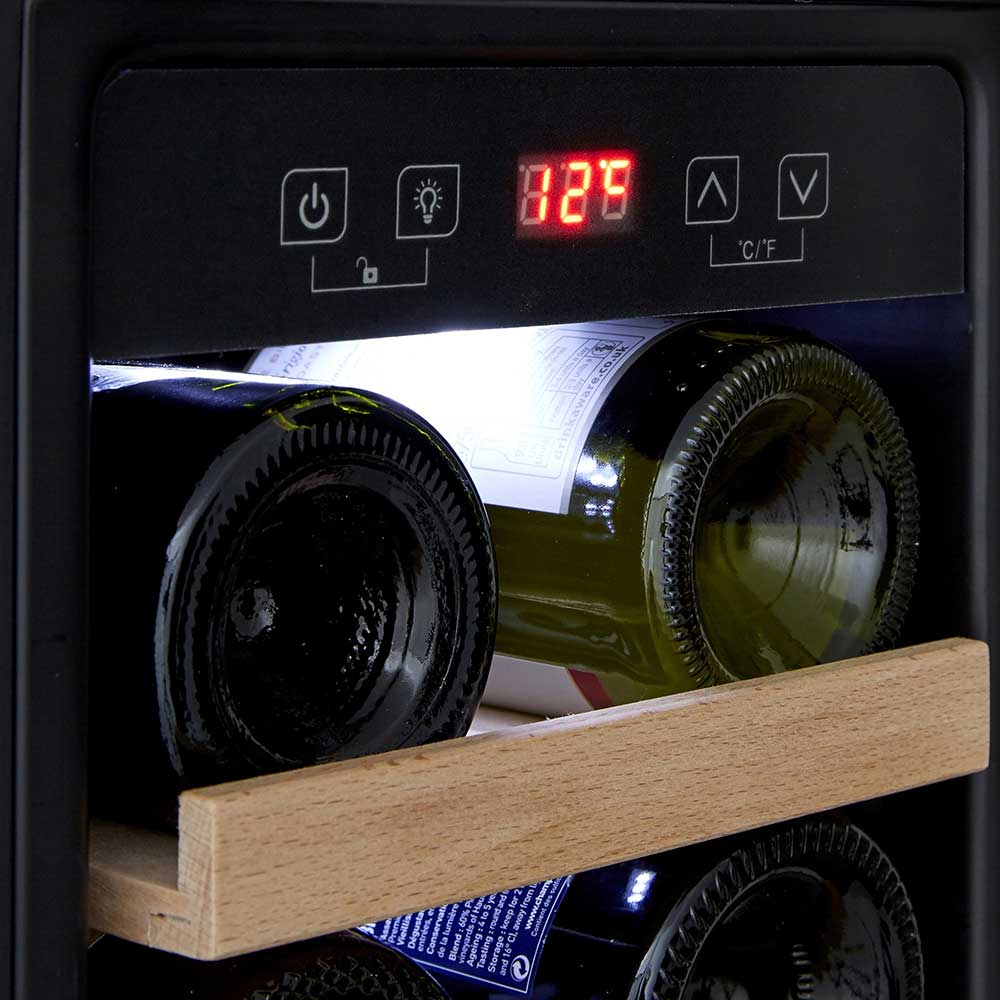
A wine fridge is a specialist type of beverage cooler built specifically around the needs of wine. The core difference is precision: where a general beverage cooler maintains a single temperature zone suitable for most drinks, a wine fridge is designed to protect and preserve wine over the long term.
Here are the key features that set wine fridges apart:
- Dual temperature zones – many wine fridges split the cabinet into two independently controlled zones, so you can store reds at 12–18°C and whites or sparkling wines at 7–12°C at the same time.
- Horizontal shelving – bottles are stored on their sides to keep the cork in contact with the wine, preventing it from drying out and letting air in. General beverage coolers typically store bottles upright.
- Humidity control – better wine fridges manage internal humidity to protect corks and labels.
- Vibration reduction – some models use thermoelectric cooling systems (rather than compressors) to minimise vibration, which can disturb sediment and affect wine quality over time.
If your collection is mostly wine, a dedicated wine fridge is a better choice than a general beverage cooler. If you want somewhere to store a mix of wine, beer, and soft drinks, a beverage cooler gives you more flexibility.
Key differences at a glance
| Feature | Standard Fridge | Mini Fridge | Beverage Cooler | Wine Fridge |
| Temperature range | 0–5°C | 0–4°C | 8–18°C | 7–18°C |
| Temperature zones | Single | Single | Single | Single or dual |
| Stores food safely? | Yes | Yes | No | No |
| Stores drinks? | Yes | Yes | Yes | Wine-focused |
| Typical capacity | 200–400+ litres | 30–65 litres | 40–120+ litres | 20–200+ bottles |
| Glass door? | Rarely | Rarely | Usually | Usually |
| Bottle orientation | Upright | Upright | Upright | Horizontal |
| Humidity control? | No | No | No | Often |
| Best for | Everything | Small food & drink storage | Mixed drinks storage | Wine collections |
Can I use a drinks cooler as a fridge?
This is one of the most common questions people ask before buying. The honest answer is no, not for food.
A beverage cooler or wine fridge operates at a temperature well above what’s recommended for food safety (5°C). Storing perishable food, like dairy, meat, or leftovers, in a drinks cooler means you’re risking bacterial growth that makes the food unsafe to eat. If you’re planning to store food, you need a fridge (standard or mini) that operates at 5°C or below.
Drink coolers are perfectly fine for keeping non-perishable drinks chilled. Bottles of wine, cans of beer, soft drinks, and juice cartons are all ideal. If your main goal is dedicated drinks storage, a beverage cooler does that job better than a fridge – it’s designed specifically for it, with a larger capacity, better aesthetics, and temperature settings calibrated for different types of drinks.
Can a mini fridge be used as a regular fridge?
Yes, in most cases. A mini fridge operates at the same food-safe temperature as a full-sized fridge and can store both food and drink. The main limitations are capacity and the absence of a freezer compartment (though some models do include a small ice box). For a student flat, a hotel room, or a secondary fridge in a utility room, a mini fridge works perfectly well as a standalone food storage solution.
What’s the difference between a wine fridge and a beverage cooler?
Both wine fridges and beverage coolers are designed exclusively for drinks and operate in a similar temperature range, but they’re not interchangeable, and the distinction matters if wine is your priority.
A beverage cooler is a more general appliance. It’s ideal for keeping a mix of drinks chilled, such as wine, beer, soft drinks, and juice. It runs at a single temperature, usually set somewhere in the middle of the range, and stores bottles and cans upright. It’s the right choice if you want a stylish, high-capacity drinks station for entertaining.
A wine fridge is a specialist appliance. It’s built around the specific requirements of wine – horizontal storage, precise temperature zones, humidity management, and low vibration. If you’re building a collection or want to store both reds and whites at their correct temperatures simultaneously, a wine fridge is the better investment.
The short version: if it’s mostly wine, go wine fridge. If it’s a mix, go beverage cooler.
-
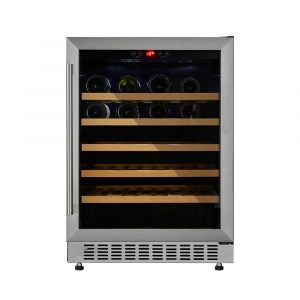
 CWC600SS
54 Bottle Freestanding Wine Cooler 60cm – Stainless Steel
£449.99 -
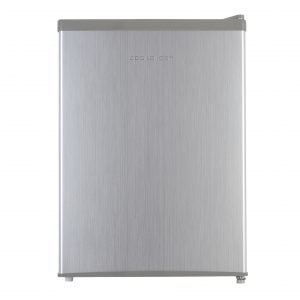
MFR67SS
65L Table Top Mini Fridge with Chiller Box – Stainless Steel
Original price was: £119.99.£101.99Current price is: £101.99.
So, which fridge should I buy?
Now that you understand the differences between each type of appliance, let’s recap the pros of each.
Choose a standard or undercounter fridge if you need a full-sized, kitchen-integrated appliance for storing food and drink.
Choose a mini fridge if you want a compact, affordable secondary fridge for a bedroom, office, or small space – one that can store both food and drink at safe temperatures.
Choose a beverage cooler if you want a dedicated drinks storage solution with a larger capacity, a stylish design, and temperatures optimised for wine, beer, and soft drinks. Just remember – it’s not a substitute for a food fridge.
Choose a wine fridge if wine is your priority. Dual temperature zones, horizontal shelving, and humidity control make a wine fridge the best way to store and protect a collection properly.
Ready to start browsing? Explore Cookology’s full range of beverage coolers, wine coolers, and mini fridges to find the right appliance for your home.
Find the right appliance for you at Cookology
Whether you’ve got your sights set on a beverage cooler or a mini fridge, it’s easy to find the perfect appliance for your needs here at Cookology. With an Excellent Trustpilot score and a vast selection of popular models to choose from, we’ve got you covered. From space-saving white mini fridges to sleek, stylish black drinks coolers and even built-in wine coolers, we do it all.
So, what are you waiting for? Discover our complete range of refrigerators and coolers and place your order online today.